Turning Wastewater Into a Clean Energy Resource
What Hounslow Heat Network Means for the Future of Sewer Thermal Energy
What if the wastewater flowing beneath our streets could help heat our homes, schools, hospitals, and commercial buildings? A pioneering project in Hounslow, West London, England is demonstrating how wastewater can become a valuable source of renewable thermal energy—and why organizations such as the Sewer Thermal Energy Network (STEN) are essential to expanding this technology.
Hounslow Project Highlights Wastewater’s Energy Potential
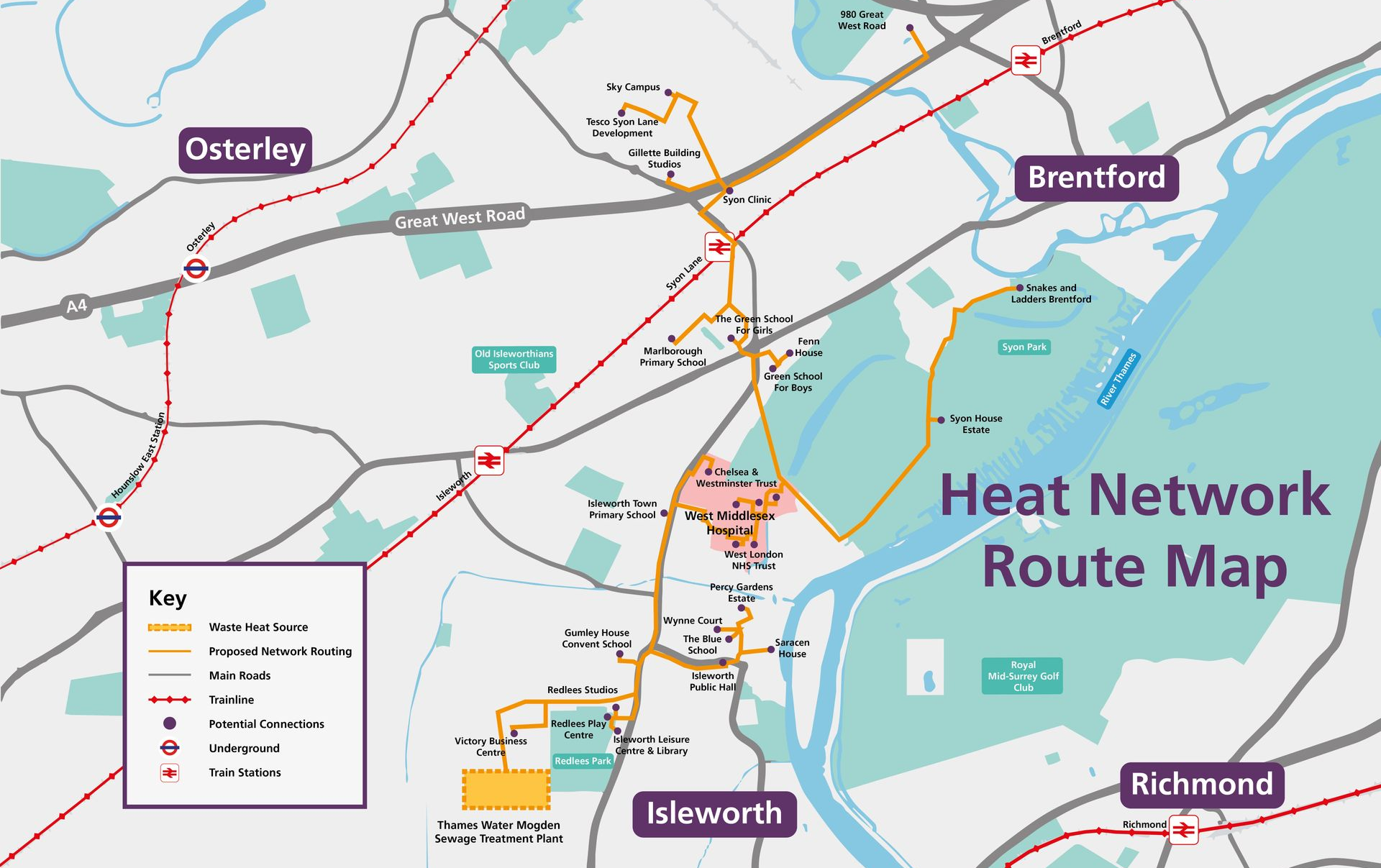
In March 2026, The London Borough of Hounslow announced plans to recover heat from treated wastewater at Thames Water Mogden Sewage Treatment Works to supply the first phase of the Hounslow Heat Network. The project is designed to deliver low-carbon heating to as many as 3,000 homes, along with hospitals, schools, libraries, commercial properties, and other public buildings.
Supported by £10.55 million in government funding, the proposed network will distribute heat through approximately 8.8 kilometers of underground pipes. Once operational, it is projected to provide 50 gigawatt-hours of low-carbon heat annually and reduce emissions by approximately 6,690 tonnes of carbon dioxide equivalent each year.
The project illustrates an important shift in how communities approach energy: wastewater is not simply something to treat and dispose of. It also represents an ongoing source of thermal energy that can support local decarbonization goals.
Connecting Hounslow’s Progress with STEN’s Mission
The Hounslow initiative closely aligns with the mission of the Sewer Thermal Energy Network (STEN), a member-supported organization dedicated to advancing the use of heat available in sewer systems and wastewater for building heating and cooling.
STEN supports municipalities, wastewater utilities, engineers, and other stakeholders through education, advocacy, information sharing, and technical capacity building. Its work helps communities understand how sewer thermal energy can be incorporated into individual buildings, district energy systems, and broader urban infrastructure.
One particularly important area is Heat Mapping. By evaluating the relationship between available wastewater heat sources and nearby heating and cooling demands, communities can identify promising locations for recovery projects. This planning process helps determine where infrastructure investments may deliver the greatest benefits.
Hounslow demonstrates the potential of connecting wastewater treatment facilities with a centralized district heating network. Similar opportunities may exist wherever substantial wastewater flows coincide with nearby buildings that require reliable heating or cooling.
A Practical Path Toward Lower-Carbon Communities
Sewer thermal energy recovery can help reduce dependence on conventional fossil-fuel heating while making better use of existing infrastructure. Because wastewater flows throughout the year, it can provide a consistent thermal resource, although system performance depends on wastewater temperatures, seasonal demand, heat pump efficiency, and project design.
Realizing this potential requires collaboration among utilities, municipalities, engineers, planners, and energy providers. Feasibility studies, heat mapping, appropriate system design, and long-term planning are essential to successful implementation.
From a Local Project to a Global Opportunity
The message is clear: the path to a lower-carbon future may run beneath our streets. With the right planning, wastewater systems can become more than essential public health infrastructure—they can also contribute to cleaner, more resilient communities. The Hounslow Heat Network is an encouraging example of how wastewater can contribute to a cleaner, more resilient energy future.
Through its educational and collaborative efforts, the
Sewer Thermal Energy Network helps communities explore similar opportunities and move from concept to practical application. We are a membership class organization with various levels of participation and benefit.
Become a member of STEN today and let's continue this important conversation.